
The Brain That Rehearses Life
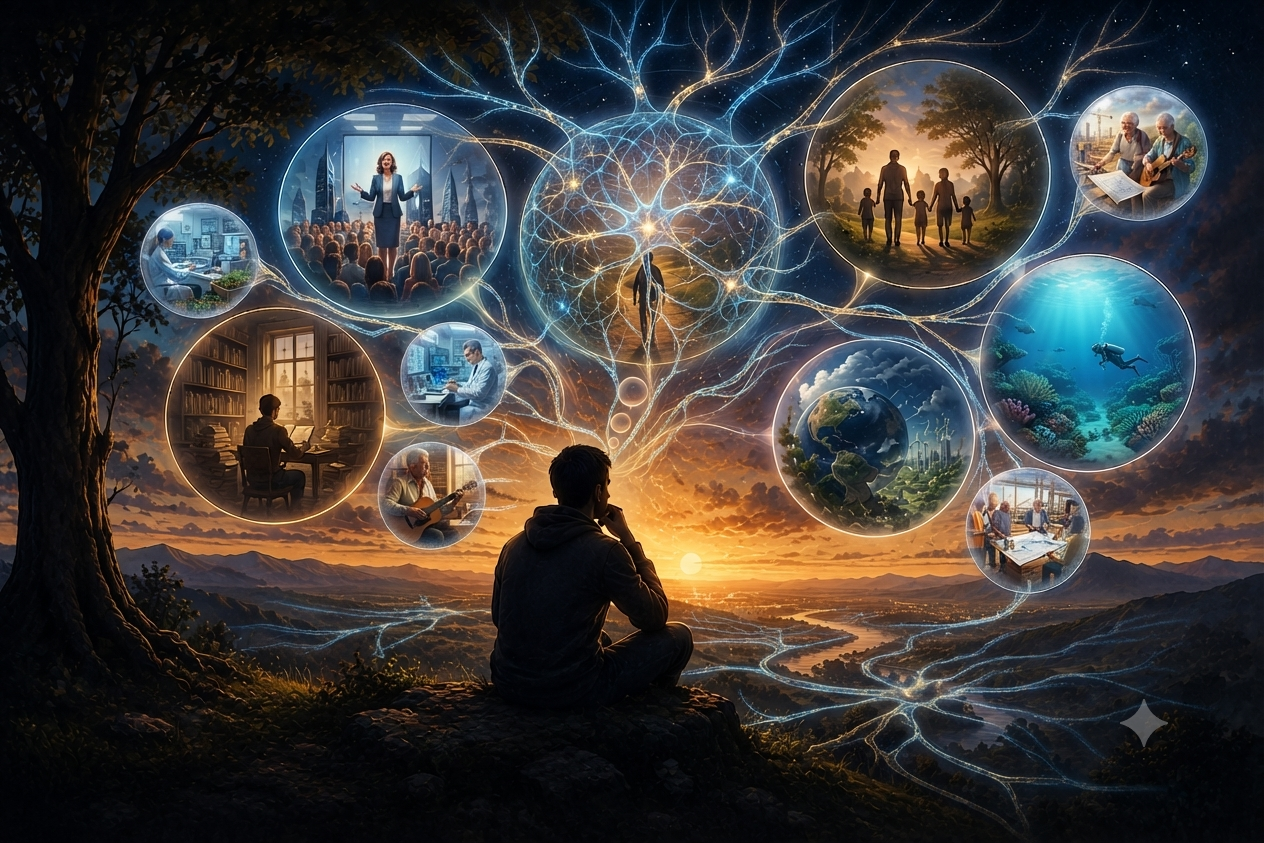
Have you ever had a conversation before actually having it? The brain can try out an experience without experiencing it.
Listen to this story
Have you ever had a conversation with someone before actually having it? They haven't said anything yet. You haven't said anything either. And yet, somewhere in your mind, the conversation has already begun.
You imagine what they might say. You prepare your answer. Perhaps you imagine yourself getting angry. Then you try the conversation again. This time, you respond differently. Nothing has happened outside. But inside your brain, something has already been practised.
We do this constantly. Before an important presentation, we rehearse the opening. Before an examination, we imagine the questions. Before a difficult conversation, we prepare our words. An athlete may picture a movement before performing it. A musician may hear a piece internally before playing it. A child turns a cardboard box into a car and acts out an entire journey.
These may look like very different activities. But they share something remarkable: the brain can try out an experience without actually experiencing it.
This is slightly different from imagining tomorrow. In the previous story, the question was: "What might happen?" Here, the question becomes: "What might I do when it happens?" The brain isn't simply looking ahead. It is testing possibilities.
This ability must have been enormously useful in the uncertain world of our ancestors. A dangerous situation might not offer the luxury of repeated mistakes. But the brain could draw upon memory, combine previous experiences and imagine an action before committing the body.
The ability to learn without always paying the full price of trial and error would have been valuable. And humans became exceptionally good at it.
Children may give us the clearest glimpse. Watch them play. A stick becomes a weapon. A chair becomes a house. A group of children becomes a family, a shop, a school, an entire imaginary world. It is easy to dismiss this as simply play.
But play also allows a child to experiment with situations before real life demands them. Negotiating. Cooperating. Arguing. Caring. Leading. Losing. Trying again. The consequences are small. The learning can be real.
Perhaps play is one of the earliest ways the human brain discovers: you can practise life before actually living it.
Culture then gives this ability an enormous library. Stories allow us to experience situations we have never personally encountered. A film shows us consequences. A teacher prepares us for something unfamiliar. A parent tells us what might happen.
Today, the library has become almost endless. We watch other people succeed and fail. We see how strangers handle difficult situations. We watch tutorials. We listen to experiences. Our brain can borrow possibilities from lives we have never lived. Not as guarantees. As templates.
But there is a curious side to this ability. Sometimes we rehearse events that never happen. We prepare the perfect answer to a question nobody asks. We replay an old argument and imagine what we should have said. We practise defending ourselves against criticism that never comes.
The same machinery that can prepare us for tomorrow can also keep replaying yesterday. The brain is capable of simulating both.
And that may be one of the extraordinary things about being human. We don't always have to experience something before learning from it. We can observe. Imagine. Rehearse. Try. Fail. Remember. Change. Try again. Reality teaches us. But imagination gives us a place to practise before reality arrives.
Perhaps that is why a person can sometimes feel prepared for something they have never experienced. They haven't lived the moment. But they have visited it in their mind. Not perfectly. Not completely. Just enough to make the unfamiliar a little less unfamiliar.
The brain cannot show us exactly what life will bring. But it can sometimes rehearse meeting it.