
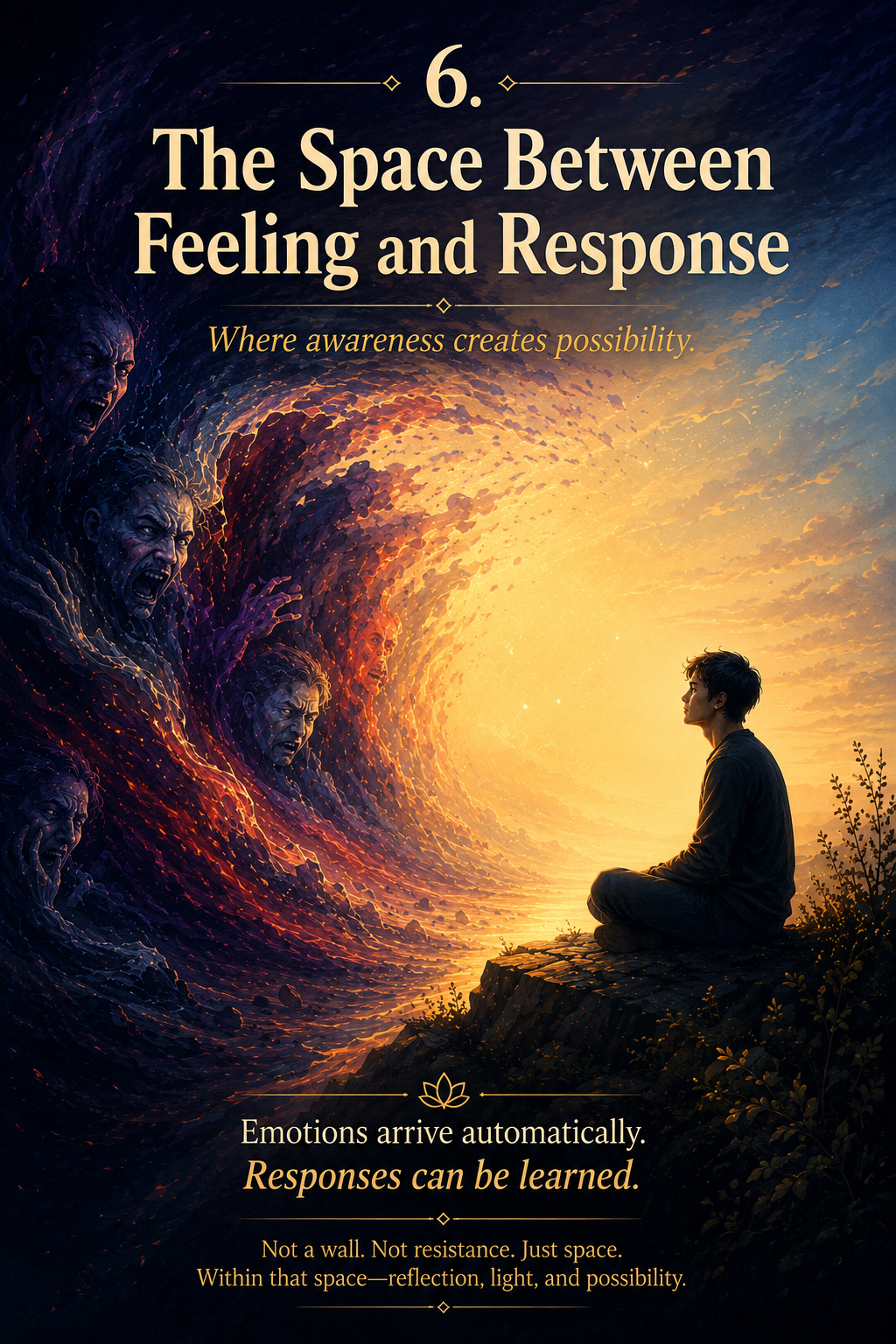
Evolution provided rapid reactions. Human learning gradually expanded the space in which thoughtful responses became possible.
Listen to this story
A sudden criticism is heard. Before the words are fully understood, something shifts inside. The heart beats a little faster. The body grows tense. Thoughts begin gathering around what has just happened. All of this often unfolds before a single deliberate decision has been made.
The emotional brain has always worked with remarkable speed.
Across countless generations, rapid responses helped living creatures react before there was time for careful analysis. When danger appeared, hesitation could carry a cost. Quick emotional reactions often proved more useful than slow certainty.
Much of that ancient machinery remains with us today. A kind gesture can bring warmth before we have explained why. Unexpected news can bring excitement before we have finished reading it. An uncertain situation can awaken unease before we fully understand what lies ahead.
· · ·
Evolution often shapes our first impulse. It does not fully determine our final response.
For most of human history, people simply experienced these rapid emotional movements as part of life itself. Then, gradually, something changed. As reflection became more deeply woven into human experience, people began noticing a quiet interval that had always been there, though it often passed unnoticed.
· · ·
Between what was felt...
and what followed...
there was space.
Sometimes it lasted only a moment. Sometimes longer. Within that brief interval, the emotional brain and the reflective mind quietly met.
Nothing about the emotion itself had changed. Fear still arrived. Joy still appeared. Anger still surged. Sadness still visited. What had changed was humanity's growing ability to recognize those feelings before every action had already unfolded.
This was not the disappearance of emotion. It was the discovery of awareness.
· · ·
Across generations, people described this experience in different ways. Some noticed it while listening to stories. Others found it in conversation, quiet reflection, shared traditions, or simply through the accumulated experiences of life. Different cultures gave different meanings to these moments, yet many arrived at a similar observation.
A feeling and a response were not always the same event.
That realization quietly expanded the possibilities of human life. It allowed room for curiosity before certainty. For patience before haste. For listening before speaking. For understanding before conclusion. Not because emotions became weaker. But because awareness became stronger.
· · ·
This quiet space gradually became part of humanity's cultural inheritance. Parents sometimes demonstrated it without naming it. Elders often embodied it through experience. Communities preserved it in stories, customs, and shared expectations. Each generation inherited not only emotions, but also countless ways of living alongside them.
Our emotions arrive automatically. Our responses can be learned.
This does not mean emotions are mistakes waiting to be corrected. Nor does it suggest that every feeling can or should be controlled. The emotional brain remains as ancient as ever. It still reacts with extraordinary speed. It still carries echoes of worlds our ancestors once inhabited. Awareness does not replace that inheritance. It simply allows us to notice it.
· · ·
Over time, humanity discovered that emotional balance did not require the pendulum to stop swinging. Joy would still come. Sorrow would still visit. Hope would still rise. Disappointment would still return. The movement itself remained part of being human.
What slowly changed was humanity's relationship with that movement. The emotional pendulum continued its timeless rhythm. Yet people increasingly discovered that they did not always have to move with every swing.
The space between feeling and response had always existed. Humanity had simply learned to notice it.